

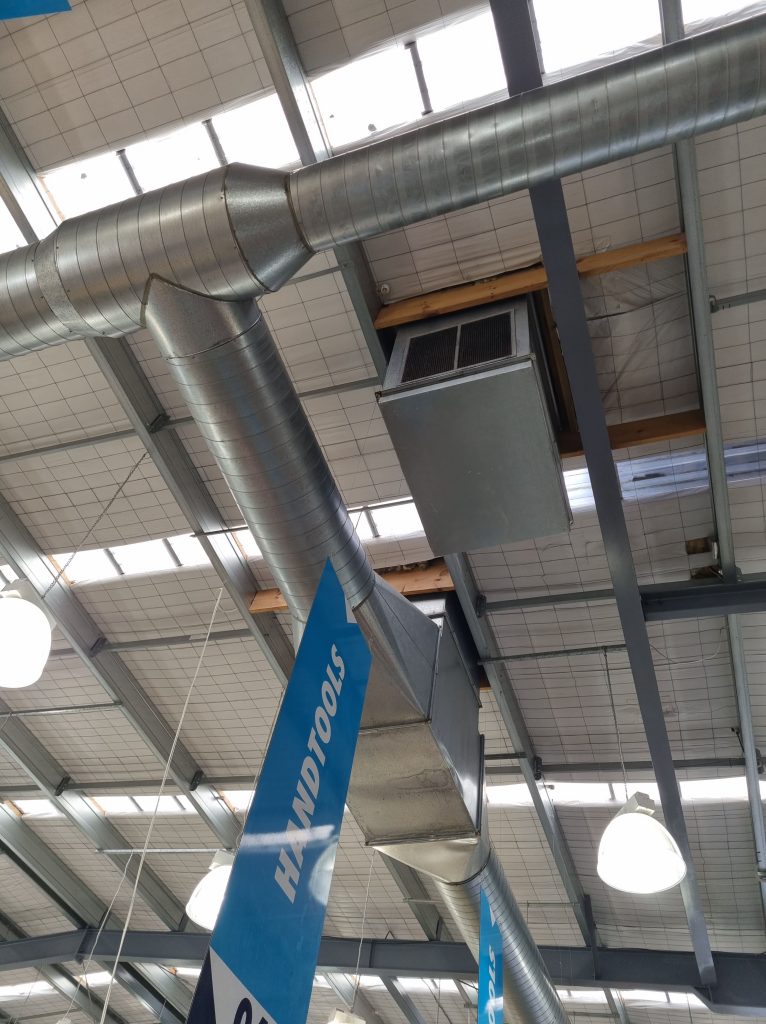
Commercial air conditioning systems are designed to cool, heat and ventilate larger spaces with far greater precision and efficiency than typical residential units. Offices, retail stores, hospitality venues and industrial sites all require reliable climate control that can adapt to changing occupancy, internal heat loads and extended operating hours.
Understanding how commercial air conditioning works helps businesses appreciate the value of proper design, installation and maintenance.
The Core Principles
A commercial air conditioning system operates on the same basic principles as any cooling system:
- Warm indoor air is drawn into the system.
- The air passes over cold evaporator coils, where heat is absorbed and moisture condenses.
- The heat is transferred outdoors via the refrigerant cycle.
- Cool, conditioned air is then recirculated through the building.
- Ventilation systems bring in fresh air, remove stale air and maintain indoor air quality.
What makes commercial systems different is their scale, complexity and ability to manage multiple zones at once.
Key Components in Commercial Systems
Evaporator and condenser coils
These coils absorb indoor heat and release it outside. In commercial systems, coils are larger and designed for heavy, continuous use.
Air handling units
These units manage airflow, filtration and temperature distribution across large areas or multiple zones.
Refrigerant compressors
Commercial systems often use advanced compressor technology that adapts output to demand, improving efficiency and reducing wear.
Ductwork and vents
Larger, more complex duct networks deliver conditioned air throughout the building while maintaining balanced airflow.
Controls and thermostats
Commercial buildings typically use centralised control systems that can adjust temperature, pressure and humidity across different areas independently.
How Different Commercial Systems Operate
VRF and VRV systems
Variable Refrigerant Flow systems are popular in commercial environments because they allow multiple indoor units to be connected to one outdoor unit. Each zone can heat or cool independently, offering precise control and strong efficiency.
Ducted air conditioning
Ducted systems use concealed ducts to supply conditioned air across large open spaces. They are common in offices and retail areas where quiet, unobtrusive cooling is needed.
Packaged rooftop units
These systems house all major components in a single outdoor cabinet and deliver conditioned air through the building’s ducting. They are widely used in factories, warehouses and larger commercial buildings.
Zoning and Smart Control
Commercial spaces rarely have uniform cooling needs. Meeting rooms, kitchens, server rooms and open plan areas each generate different levels of heat. This is why zoning is essential.
Zoned systems allow each area to have its own temperature setting and airflow rate. This avoids cooling empty rooms and reduces energy waste. Smart control systems, often linked to a Building Management System, adjust settings based on occupancy, time of day and environmental conditions.
Ventilation and Air Quality
Commercial environments must maintain healthy air quality. Ventilation systems bring in fresh outdoor air, filter dust and pollutants, and control humidity. Energy recovery technology can reclaim heat or cooling from exhaust air, improving efficiency.
Good indoor air quality is especially important in workplaces where comfort, productivity and health are directly impacted by temperature and airflow.
Residential vs Commercial Air Conditioning
While residential air conditioning focuses on comfort for smaller spaces, commercial systems must handle:
- Larger floor areas and higher ceilings
- Higher occupancy levels
- Greater internal heat loads from lighting, equipment and machinery
- Stricter ventilation and air quality requirements
- Complex zoning and longer operating periods
Commercial systems are therefore built for durability, precision and continuous performance.
Why Proper Design Matters
A commercial air conditioning system must be matched to the building’s layout, heat load, insulation, occupancy patterns and ventilation needs. A poorly sized or poorly designed system can result in uneven cooling, high running costs and unnecessary wear.