

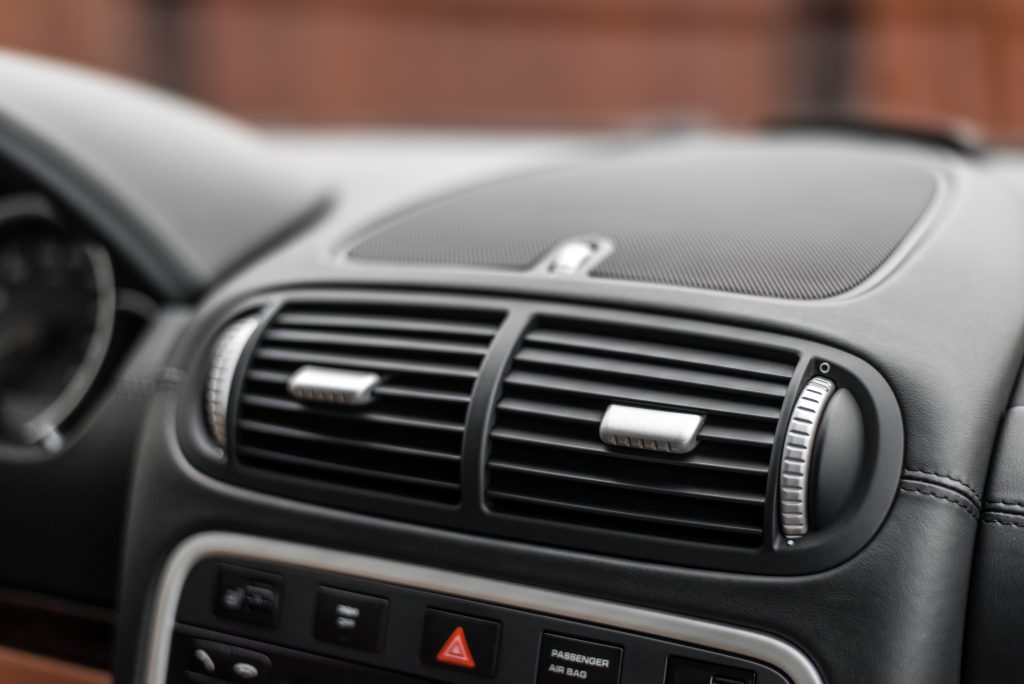
There is never a good time for your car air conditioning to stop working properly, but finding out it is only blowing warm air halfway through a summer road trip is particularly frustrating.
If your car air con is not as cold as it used to be, there are several things you can check before heading away. Some are simple maintenance issues, while others point to a refrigerant problem, leak or component fault that needs professional diagnosis.
Getting your automotive air conditioning checked before summer can save you from dealing with an uncomfortable cabin when temperatures are at their highest.
Check the Airflow First
Start with the simplest question: Is the air coming out of the vents strongly enough?
If the airflow is weak even when the fan is turned up, the problem may not be the refrigerant.
A blocked or dirty cabin air filter can restrict airflow through the vehicle’s heating and air conditioning system. Leaves, dust, pollen and other debris can build up in the filter over time.
Common signs of a cabin filter problem include:
- Weak airflow from the vents
- Unusual smells
- Fogging or poor demisting
- Reduced airflow even at higher fan speeds
The location and replacement interval of the filter varies between vehicles, so check the manufacturer’s recommendations.
If cleaning or replacing the filter does not improve airflow, an automotive air conditioning service can help identify other restrictions or component faults.
Make Sure the A/C Is Actually Switching On
It sounds obvious, but check the basics before assuming there is a major fault.
Set the air conditioning to its coldest setting, turn the fan up and make sure the A/C indicator illuminates.
If the system does not engage when switched on, there may be an electrical problem, control issue or compressor-related fault.
Unusual clicking, squealing or other noises when the A/C is switched on are also worth investigating. These can indicate a problem that needs professional attention rather than a simple change to the settings.
Try Recirculation Mode
Once you have established that the system is operating, use recirculation mode when you want to cool the cabin quickly.
Recirculation allows the system to continue cooling air that is already inside the vehicle rather than constantly drawing hot outside air into the cabin.
This is particularly useful when a vehicle has been sitting in the sun.
On a very hot day, opening the doors or windows briefly before setting off can help remove some of the built-up heat. Once the cabin has aired out, close the windows and use recirculation to help the system cool the interior more efficiently.
Check for Signs of a Refrigerant Problem
One of the most common reasons a car’s air conditioning gradually becomes less effective is low refrigerant.
You may notice that the air is still slightly cool, but nowhere near as cold as it used to be. Cooling may also take longer to become noticeable.
Low refrigerant does not necessarily mean the system simply needs a top-up. Refrigerant should remain within a sealed system, so a significant loss can indicate a leak or another fault.
A proper car air conditioning service checks the system rather than simply adding refrigerant. Depending on the fault, this may include checking operating pressures, inspecting for leaks and assessing compressor performance.
If the air conditioning becomes warm again soon after a regas, the underlying problem needs to be diagnosed.
Check the Condenser Is Not Blocked
The condenser is positioned at the front of the vehicle where it can receive airflow.
Because of its location, it can collect dust, insects, leaves and other road debris.
A heavily obstructed condenser can affect the system’s ability to reject heat and may reduce cooling performance.
Do not try to dismantle components or force high-pressure water into the system. A visual inspection for obvious debris is reasonable, but damaged fins, refrigerant-system faults or restricted components should be assessed by a technician.
Comfort Group provides automotive air conditioning repairs and servicing for a range of vehicles, including cars, utes, vans, trucks and heavy machinery.
Do Not Ignore Unusual Smells or Noises
Your vehicle’s A/C system should not produce strong musty smells, burning smells or unusual mechanical noises.
A musty smell can be associated with moisture, microbial growth or a dirty cabin filter. A clicking, grinding or squealing noise when the A/C is switched on may indicate a mechanical or compressor-related issue.
These symptoms should not be ignored, particularly if the cooling performance has also deteriorated.
Getting a small problem checked early can be preferable to discovering a failed component just before a long trip.
Is Water Under the Car Normal?
A small puddle of clear, odourless water underneath the vehicle after using the air conditioning is usually normal.
The A/C system removes moisture from the air as the evaporator cools it, and that water is designed to drain underneath the vehicle.
If the drain becomes blocked or disconnected, water can instead end up inside the vehicle, including around the passenger footwell.
Water inside the cabin is therefore not something to ignore. It may indicate a drainage issue that needs attention.
Use Your Air Conditioning Before the Trip
It is better to discover a weak A/C system at home than 300 kilometres down the road.
Turn the system on before summer arrives and check:
- Is the air genuinely cold?
- Is the airflow strong?
- Does the temperature change quickly?
- Are there unusual smells?
- Are there unusual noises?
- Does the system keep cooling consistently?
- Is there any water appearing inside the cabin?
Using the air conditioning periodically throughout the year can also help keep the system operating correctly. Regular operation helps circulate refrigerant and lubricant through the system and may reduce the likelihood of seals drying out during long periods of inactivity.
If something does not seem right, arranging an auto air conditioning check in Hamilton before travelling can help identify problems early.
When Does a Car Need an A/C Service?
A professional inspection is worthwhile when the system is noticeably weaker, stops producing cold air, develops unusual noises or smells, or starts behaving differently after previous servicing.
A technician can check the refrigerant charge, operating pressures, electrical operation, compressor and other components to establish whether the problem is a simple service requirement or a repair.
Different vehicles can use different refrigerants, so the correct refrigerant and manufacturer specifications need to be followed.
Comfort Group’s automotive air conditioning services cover diagnosis, servicing, repairs and replacement of faulty components, helping motorists address cooling problems before they become more serious.
Getting Your Car Air Conditioning Ready for Summer
The best time to find an air conditioning problem is before you need it.
A basic check of airflow, cabin filters, controls and cooling performance can identify some issues early. When the system is low on refrigerant, leaking or showing signs of a component fault, professional diagnosis is the safer approach.
Comfort Group provides automotive air conditioning servicing, repairs and replacements across Hamilton, Waikato, the Hauraki Plains and Coromandel Peninsula. Its automotive service covers cars, utes, vans, trucks and heavy machinery, with diagnostics and repairs for most makes and models.
For anyone searching for auto air conditioning in Hamilton or car air conditioning in Hamilton, getting the system checked before a long summer trip can help ensure the cabin stays cool when you need it most.
Find out more about Comfort Group’s automotive air conditioning services or visit the Comfort Group website for information about the company’s wider air conditioning and refrigeration services.